Episode Transcript
[00:00:19] Speaker A: Hey there, all you true crime fans. I'm Amanda.
[00:00:23] Speaker B: And I'm Corey.
[00:00:26] Speaker A: And Merry Christmas if you celebrate.
[00:00:29] Speaker B: And Happy New Year if you celebrate that.
I mean, can it get any worse? Maybe.
[00:00:36] Speaker A: Don't tempt the fates. Okay, you know what? We don't have the Murder Wasps, so I will take that as a win.
[00:00:43] Speaker B: Or, like, raining frogs or something like that. So there you go.
[00:00:47] Speaker A: That would be, like, my worst nightmare. I think.
[00:00:50] Speaker B: It would be your worst nightmare.
[00:00:52] Speaker A: Yeah. I don't.
I think it might be their worst nightmare, too.
[00:00:55] Speaker B: Yeah. It'd be toads for you.
[00:00:57] Speaker A: Yeah.
[00:00:57] Speaker B: There's not really frogs.
[00:00:59] Speaker A: I thought they were rocks. Okay.
Thought they were rocks.
[00:01:04] Speaker B: Good times. Good Times.
[00:01:06] Speaker A: Well, happy 2026, everybody. I should apologize. I recently got a cat, so you may hear it knocking everything over in the background.
[00:01:18] Speaker B: I should apologize, too. I did not recently get a cat, but I have dogs.
[00:01:22] Speaker A: I mean, I do, too. Same.
Well, I'm really excited to tell you guys about this case today, and we're kind of going through a different format, so let us know what you guys think of it.
I think it'll be kind of a cool way to tell you guys a story.
So before we start today's episode, I do want to say something up front. This is not a story. This is someone's life. And more importantly, this is a family's worst nightmare.
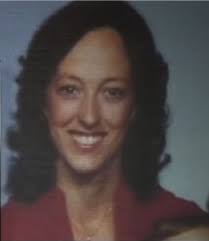
The woman at the center of this case is Susan Powell. She was a mother, a daughter, a friend. And the thing that makes this case so difficult is that while many people think they know it, very little is actually resolved.
All right, Corey, I am going to tell you about this case as if you've never heard it before, even though I'm sure you have.
And I want you to stop me whenever something hits you, because I think that's how listeners need to experience this honestly and in real time.
[00:02:25] Speaker B: Okay.
[00:02:26] Speaker A: Susan Cox was born in 1981 and grew up in New Mexico.
By all documented accounts, she was creative, thoughtful, and deeply devoted to her children.
She enjoyed music writing and had aspirations of building a stable, loving life.
In 2001, a man from Susan's past re entered her life.
That man was Josh Powell.
[00:02:50] Speaker B: I didn't know he was a re entry.
I didn't thought he was a new entry.
[00:02:56] Speaker A: I know. No. So there's one more detail about how Susan and Josh met that I want to mention, not because it proves anything, but because it adds context and it relates to your comment.
So before Josh ever dated Susan, he actually briefly dated her sister Jennifer.
[00:03:17] Speaker B: What?
[00:03:18] Speaker A: Yeah. So it wasn't A long relationship at the time, and it didn't raise any alarms. But after Susan disappeared, her family looked back on it and said that it made Josh's presence in their lives feel uncomfortable in hindsight.
[00:03:35] Speaker B: First of all, I have some questions.
How could you date your sister's ex boyfriend? Like, I love my sisters, but I don't really. I wouldn't want to date any of their former beaus.
[00:03:47] Speaker A: Right.
[00:03:49] Speaker B: I mean, they're former for a reason.
[00:03:52] Speaker A: Exactly. But there was a big age difference, too.
[00:03:55] Speaker B: Yeah. Yeah, I can imagine.
How old was he?
[00:04:00] Speaker A: Um, he was several years older than she was. And we'll get more into a little bit of information about him.
Um, but I kind of wanted to keep at least this first episode. Cause this is going to be in several parts, guys, but this one is going to be all about Susan. So you guys really have an idea of who she is. And we keep her at the center of the story.
So let's keep going because it gets wild.
But I do want to be clear that there's no allegation of overlap between the two dating, and there's no wrongdoing. It's just one of those little details that feels different once you know what happens later.
Friends and family later described him as emotionally distant. But at the time, nothing about him raised alarms that would predict what was to come.
[00:04:46] Speaker B: Hmm.
[00:04:47] Speaker A: Okay. And there's a really, really big part of Susan's life that we need to discuss next, because it absolutely shaped how she saw the world, how she made decisions, and how she understood marriage. So Susan was raised in the Mormon Church. Her faith was not casual or cultural.
It was deeply personal.
She believed in commitment, in family, and in doing the right thing, even when it was difficult. Friends and family described Susan as thoughtful and sincere in her beliefs. She took her faith seriously, and it influenced how she approached motherhood, marriage, and responsibility.
Susan actually met Josh at a dinner that he had hosted during college, where he had gotten together with some other Mormon members. And that's how the two.
[00:05:36] Speaker B: I was just going to ask if he was Mormon.
[00:05:37] Speaker A: He was. And that's how the two met. It was actually. Well, I guess we're reintroduced. It was at his apartment.
And she. I mean, she fell quick and hard for him.
The two of them dated for just a few months and were married in the Portland, Oregon temple in 2001.
And again, that detail matters, because a temple marriage in the Mormon faith isn't just a wedding. It's a covenant.
So for someone like Susan, being married in the temple meant believing that marriage was Eternal, that it carried spiritual weight, accountability, and responsibility beyond just this life.
It meant commitment not only to a spouse, but to shared values, shared faith, and the idea of building a family grounded in those beliefs.
And Susan did take that very seriously.
And that matters because over time, Susan and Josh did not share the same relationship with religion.
Josh would actually distance himself from the Mormon church pretty early on in the marriage.
Susan did not.
According to Susan's journals, this became a growing source of tension between them. They argued about church attendance, belief, tithing, and what kind of spiritual foundation they wanted for their children.
For Susan, faith wasn't just about church on Sundays. It was about values, stability, and accountability.
And as her marriage became more strained, Susan struggled with what her faith taught about endurance, about trying to make a marriage work, while also feeling increasingly unsafe inside of it.
That internal conflict shows up repeatedly in her writings. Susan wasn't just afraid. She was torn between what she believed marriage should be and what her lived reality actually was.
[00:07:37] Speaker B: This is one of the things I feel like religion does to people, is that the concept of it is fine and great, but in reality, nothing is like that. Like, I'm not trying to dog on people with religion, like, do you.
But if your idea of marriage is this happy, like, thing, and then it turns out your husband's either an abuser or a crazy person or not just your husband, because it can be women, too. Your spouse is, you know, does all these shady things behind your back. Is that. Do you have to live with that because your religion tells you to? Like, that doesn't make any sense to me.
You should be able to separate the two. I think once your. Once your marriage isn't what the teachings tell you. You know what I mean?
[00:08:32] Speaker A: Oh, definitely. And that is why Susan stayed with.
[00:08:34] Speaker B: Josh and because her religion told her to.
[00:08:38] Speaker A: And we'll get more into it. But she really did struggle with what her religion was telling her to do and what she was experiencing. Because he wasn't really physically awful to her.
[00:08:50] Speaker B: Right.
[00:08:51] Speaker A: But emotionally, financially, I mean, we'll definitely get more into it. And she was just kind of forced to live with it.
[00:09:00] Speaker B: And not because. Not because she.
Because she wasn't smart, but because she believed in religion so much that she just thought that that's what you. You did, and that's not okay.
[00:09:13] Speaker A: Well. And you know, she fell in love with somebody who ended up proving out.
[00:09:18] Speaker B: To be somebody different.
[00:09:20] Speaker A: Correct.
But they did eventually settle in West Valley City, Utah, where Susan and Josh would go on to have two sons, Charlie, who was born in 2005. And Braden, who was born in 2007.
And this is where I want to kind of slow down, because on the surface, they looked like a young family building a life together.
But privately, and this. This is documented, Susan was deeply unhappy.
[00:09:49] Speaker B: Did she write a lot of journals?
[00:09:52] Speaker A: So Susan actually kept journals and personal writings. And I'm not just talking like a casual diary entry, like once or twice a month or like a New Year's resolution kind of thing. I'm talking years and years of very detailed, incredibly personal daily entries.
And these were eventually obtained by investigators and reviewed as part of the case. But we'll get more into that in the next episode.
But in her writing, Susan described feeling isolated, feeling emotionally neglected, and incredibly afraid of Josh's behavior.
She wrote about his controlling tendencies. She wrote about financial stress.
She wrote about fear, not once, but repeatedly.
And she even talked to friends about that.
And I do, again, I want to be really clear here, because this isn't like hindsight. These are Susan's own words written before she disappeared.
So closer to the time that she went missing, she had actually obtained a safe deposit box at the bank that she was working at.
And in a document that she tucked into that safe deposit box that only she controlled, she wrote, quote, four family friends of Susan, all except for Josh Powell husband. I don't trust him. End quote.
And on the same document wrote, quote, if I die, it may not be an accident, even if it looks like one. End quote.
So, Corey, let's say I handed you a note or, you know, an email, something. What would you like? What would you think?
[00:11:38] Speaker B: I would think your husband is trying to kill you, right?
Then I would probably take that and go to the police or try and help you get out.
[00:11:49] Speaker A: And again, it goes back to her religion.
She was so afraid to defy the church that she stayed.
But later it was found that she had actually recorded a video walking through their home documenting her belongings because she was so afraid of Josh and what he might do. And it was.
If I can find the video, I'll put a link to it in the show notes.
But it's.
It's pretty wild.
And you guys. If you guys want to read some of these journal entries, they're online.
Like, we're not making this up for, like, a dramatic effect or anything like that. Like, this is actually what she wrote in her own words, what she was feeling. And she was a very, very avid journaler. I mean, it was. It was something constant. And she. She also was. She was very active on social media, and just, I Mean, she openly talked about this, and I think that that's kind of like the saddest part of this whole thing is, is being. Everyone kind of knew she was afraid.
[00:12:55] Speaker B: Hmm. What did they both do for work?
[00:12:59] Speaker A: Josh worked multiple jobs. Okay.
He did some stuff in it. He ended up getting into real estate for a minute.
He was pretty flaky when it came to employment. But Susan actually originally was a hairstylist.
And once she had, the boys got out of that and decided that, you know, it was time for her to go back to work. She wanted to help ease kind of some of the financial burden. And she went to work at a bank and actually, like, really excelled.
She. I. I believe she worked at a couple different banks, you know, over the years, and she did really, really well there. Everybody loved her. She was great at her job. She ended up getting into investing and.
But we need to talk about Josh's father, which is kind of a weird segue because why would we be talking about her father in law?
But Steve Powell was actually a very regular presence in their lives, and Susan was very uncomfortable with him. I'm talking, like, deeply uncomfortable.
[00:14:08] Speaker B: Can you imagine being your father in law is creepy, and your dad's or your husband's like, no, he's okay. You're like, I don't want to be around him. And he's like, well, he's my dad, so whatever.
[00:14:18] Speaker A: Right. And again, you know, growing up Mormon, it was all about family, and she was trying to keep her husband happy.
And this discomfort that she felt, it's not speculated.
It's documented. Again, she wrote everything down.
[00:14:35] Speaker B: Right.
[00:14:36] Speaker A: And she expressed fears about his behavior and about being around him.
[00:14:40] Speaker B: That's crazy.
[00:14:41] Speaker A: Yeah. And these. I mean, we're not talking about rumors, Right. There's moments in Susan's emails that give us insight into how she felt about certain family dynamics. And one involved her father in law, Steve Powell.
In an email, Susan wrote that she was uncomfortable with a song that he had written about her.
[00:15:01] Speaker B: Ew.
[00:15:02] Speaker A: Something that might sound odd at first, but when it came from Susan, it reflected something deeper than just like an awkward musical tribute, which is already weird.
Please don't ever write a song about me.
[00:15:16] Speaker B: Right. I don't want one either.
[00:15:18] Speaker A: Yeah.
[00:15:19] Speaker B: Unless we're romantically involved. And even then, it's kind of iffy.
[00:15:22] Speaker A: Yeah, even then I don't want one.
No. But. So Steve Powell, he was using the alias Steve Chantry.
He wrote dozens of songs expressing a romantic obsession. Yeah, that was his. That was his singer, songwriter name, his alter ego.
Except it wasn't really an alter ego. It was just him with a different name because, I mean, these were creepy songs.
[00:15:49] Speaker B: Did you hear any of them?
[00:15:51] Speaker A: I did. Yeah.
[00:15:52] Speaker B: Okay.
[00:15:53] Speaker A: I have heard some of them.
Just know he would never make it big in.
[00:16:00] Speaker B: In the Republican world.
[00:16:02] Speaker A: Yeah. In. In music biz, as they say.
[00:16:06] Speaker B: Can find him on YouTube.
[00:16:08] Speaker A: I actually, I do think you can find them on YouTube.
[00:16:10] Speaker B: Okay, there you go, people. You can listen to them on YouTube.
[00:16:14] Speaker A: I mean, listener be warned.
But she. Even Susan recorded some backup vocals for some of the tracks, and she recorded them without knowing that they were actually about her.
[00:16:27] Speaker B: Oh, okay.
[00:16:28] Speaker A: Yeah. So one song was Liddy with the Sunlit Hair, but after Susan's disappearance, he changed the name to Susan with the Sunlit Hair.
[00:16:39] Speaker B: Oh, dear.
[00:16:41] Speaker A: He had another one that said I only Feel love.
There was one called Waiting for your, and there was one called you, Sweet Name was on My Lips Again. And those are just a few of them that are about Susan.
[00:16:54] Speaker B: Huh. That's weird.
[00:16:56] Speaker A: Super weird.
[00:16:57] Speaker B: Yeah.
[00:17:00] Speaker A: And I mean, if you guys want, like, a full in depth of this case, the cold podcast did an amazing job.
And he actually talks about how Steve Powell was big into documenting things too.
But Steve was like a video, like a vlogger before his time. But I'm like, they get pretty graphic.
Like, he starts talking about how she was sick and he rubbed her feet.
[00:17:30] Speaker B: Ew.
[00:17:31] Speaker A: And it progresses from there about, like, these little tiny interactions that she didn't really think anything of aside from like, okay, you're being creepy. But it was. That was kind of it. He took this as, like, she didn't stop me explicitly, which means this is what she wants. She loves me.
[00:17:53] Speaker B: Right? As all crazy people think.
[00:17:56] Speaker A: Oh, my gosh. To listen to this man talk. And you guys can find his videos also, which I don't recommend because gross.
But he vlogged everything.
He had pictures of her that she didn't know. They were, like, voyeurism style pictures.
He had stolen bras, panties.
There's a video of him masturbating while he's describing, like, how he interacted with her. It's awful. He's a terrible person.
[00:18:34] Speaker B: Huh?
[00:18:36] Speaker A: And she had to endure this.
And she even mentioned that Steve once tried to comfort her about her problems with Josh and that he told her that, quote, the family knew how much she was putting up with, end quote.
[00:18:54] Speaker B: Like, that's weird.
[00:18:56] Speaker A: Just a weird dude. And she had tried to talk to Josh about this and was brushed off.
And, like, we're not. I'm not being Dramatic. I'm not trying to sensationalize this. These are Susan's own words. These are Steve Powell's own words.
And he was obsessed with her.
And, you know, she was aware of. Of his involvement in their marriage, and she was really disturbed by Steve's involvement.
[00:19:30] Speaker B: Yeah.
[00:19:32] Speaker A: And that becomes really important later because after Susan disappeared, it was Josh and his father who refused to return Susan's personal journals to her family.
[00:19:47] Speaker B: Hmm.
[00:19:48] Speaker A: Susan's words, her fears, her experiences were physically kept from the people who loved her most by the people that she feared the most.
[00:19:58] Speaker B: How did they end up getting him back?
Or is that for later times?
[00:20:03] Speaker A: We'll get more into it later. But it ended up kind of being a negotiation tactic.
[00:20:08] Speaker B: Oh, okay.
Like, we'll give you this if you give us those.
[00:20:13] Speaker A: Yeah, kind of.
It was kind of. It was a little bit of like a trap laid by police because police knew they needed to get their hands on her journals.
[00:20:23] Speaker B: Right. Were pages missing or anything like that?
[00:20:26] Speaker A: I don't believe so.
[00:20:27] Speaker B: Okay.
[00:20:28] Speaker A: But after Susan went missing, there was a website created that they believe Steve Powell and other Powell family members ran basically kind of saying that Susan left on her own accord. And she was this terrible person, and she was this like, sex crazed woman who just went off to be with a new man. And I mean, it was. They were horrible.
Horrible. This isn't like just like some stranger or a neighbor that you have, like a feud with. I mean, this is your daughter in law and your wife.
[00:21:11] Speaker B: Yeah.
[00:21:12] Speaker A: But I digress, because we'll talk much, much more about Susan, Al, in the next episode, because his role actually becomes much more significant after Susan's gone.
But I do think that it matters to say this now. Susan didn't feel safe in the world she was living in. And she wrote that down.
[00:21:36] Speaker B: Yeah. How many journals did she have?
[00:21:38] Speaker A: Hundreds. I mean, years and years and years of journals going back to, like, teenage years. And like, if you guys have ever gone back and read your, like, your Facebook statuses from the 2000s, like, that was when I was a teenager.
So, like, if you go back, you're like, oh, my God, I'm embarrassed by myself.
[00:21:58] Speaker B: I didn't like Facebook. I said teenager.
[00:22:01] Speaker A: Well, you know, that's fine.
Mine are. My. My teenage years are.
My late teenage years are documented on my social media.
[00:22:11] Speaker B: We barely have the Internet.
[00:22:12] Speaker A: Right.
But I mean, if you were to go back and read your diary from when you were 15, 16, 17 years old, you'd be like, oh, my gosh, Young Corey, you know, nothing yet, you know, and you're kind of. You write silly things, and, I mean, it's all stuff I wouldn't want people seeing. Now. I'd be mortified. But there is another layer to Susan's situation that matters here, and that involves her employment.
So she worked outside of the home at several different points during the marriage. She took jobs when she could, often part time, while also caring for Charlie and Brayden.
But according to Susan's own writings and emails, she did not control any of her own income.
Susan wrote that when she earned money, her paychecks went directly to Josh, and she did not have any independent access to those funds.
Josh managed the household, the household finances in detail, tracking spending down to the exact category and totals.
And Susan described feeling monitored rather than supported. And this, like, this isn't just about, like, budgeting, because, yes, you should know where your money's going and, you know, you should be cognizant of what you're spending your money on. Like, thank God Chris doesn't check to see how much money I spend on Starbucks.
But that's like, that's not what this was. This was. Susan had no financial independence.
She didn't have any private savings. She had no safety net that she could access on her own if she even needed to leave, which is probably another huge factor in why she stayed as long as she did.
[00:23:59] Speaker B: Because she didn't have any money.
[00:24:00] Speaker A: She couldn't go anywhere. She was so micromanaged by him.
She even sent an email to her friend Linda Bagley stating, quote, having every year down to the penny of totals of each category is a priority for my husband and not me, end quote. And that kind of financial control matters because it completely limited her options, especially for someone who was already afraid.
[00:24:28] Speaker B: I believe in budgeting, too. Like, it's. You should do that, but you can't.
Like, you can't not give someone else any money.
[00:24:37] Speaker A: Like, right.
[00:24:38] Speaker B: If you're going to the store. And she's like, hey, I spent. He's like, oh, you spent $5 too much.
[00:24:44] Speaker A: And he really did that. He would make her go to several different grocery stores to get the lowest price on things, and he would be mad at her if she came home and had overspent or he felt that she had overspent because she spent, you know, $3 on broccoli when she could have gone to the store down the street or four towns over and spent $2 and 50 cents.
I mean, it was. It was very, very controlled, monitored.
And Susan expressed concern that if anything ever happened to her, Josh should be investigated.
She also confided in friends and family that she was considering divorce, something that, of course, Josh was strongly opposed to.
And, I mean, that's a big deal for her to get to that point.
[00:25:34] Speaker B: Right.
[00:25:35] Speaker A: With how strongly she felt about her faith, to get to the point where she's like, divorce might be my only option.
[00:25:41] Speaker B: Right.
[00:25:42] Speaker A: That's pretty huge.
And, like, don't get me wrong, none of this proves a crime.
I'm aware of that. But I do think it paints some context.
This wasn't some happy marriage quietly falling apart.
It was a marriage where one person was afraid and the other person had power.
There's another thing that I want to make clear here, because it comes up often when people look back on this case.
Despite everything that Susan documented in her journals and her private writings, she never formally reported abuse to law enforcement.
So there's no actual police reports filed by Susan alleging any kind of domestic violence. No restraining orders, no official complaints. That doesn't mean that she wasn't afraid.
It just means that she handled her fear quietly. Susan processed what she was living through on paper, in journals, in emails, in documents that she protected, but she didn't take her fear into a legal space.
And that matters because after Susan disappeared, investigators were limited to what they could legally act on.
Susan's warnings existed, but they existed only privately, which is something that we see far too often in cases like this.
[00:27:05] Speaker B: Yep. She. I mean, to be fair, she probably thought she wasn't going to be believed by people.
Her friends, maybe. But, you know, you always have that fear in the back of your mind that when you go to the police, they're going to be like, yeah, you're making a big deal out of nothing.
[00:27:22] Speaker A: Yeah.
[00:27:22] Speaker B: And it was 2000.
What? 2008.
[00:27:25] Speaker A: 2009.
[00:27:26] Speaker B: A different time.
Still a different time.
[00:27:29] Speaker A: Yeah.
[00:27:29] Speaker B: Well, even though it wasn't that long ago, it's still a big difference.
[00:27:33] Speaker A: Definitely.
And, I mean, I'm not from Utah, but I know that there's. I know that religion is. Is really important there.
And then there's that level of embarrassment that, you know, she doesn't want to admit that her marriage isn't working or that she's unsafe.
[00:27:55] Speaker B: Right.
[00:27:55] Speaker A: Which is so bad.
[00:27:57] Speaker B: Mm.
[00:27:59] Speaker A: So I think that we should talk a little bit more about timing.
Sunday, December 6, 2009, is the last day that Susan Powell is known to be alive.
In the days leading up to that Sunday, Susan attended church.
She interacted with neighbors, and she made plans for the future.
There is no documented evidence that she was preparing to Disappear. No packed bags, no farewell messages, no financial withdrawals.
Which is important because early on, the idea of a voluntary disappearance was floated.
[00:28:39] Speaker B: Publicly, but which it always is. Yeah. Because you're always like, oh, no, she left. Really, though, did she?
[00:28:46] Speaker A: Right. She's in the. She can make her own choices, but. Right. What mother leaves her two young sons?
[00:28:55] Speaker B: Right.
[00:28:55] Speaker A: Leaves with no money, leaves her purse.
She doesn't have a car.
All of that to say like that wasn't supported by any of the evidence.
And investigators were able to confirm pretty early on that Susan didn't even spend that Sunday alone. She spent it with a neighbor, someone who knew her well, who was inside of their home that day. And according to that neighbor, Susan seemed normal.
She didn't talk about being scared. She didn't say she was leaving.
She didn't act like somebody preparing to disappear.
And at one point, Susan even went and laid down to take a nap, which to me says that she wasn't acting afraid or frantic. She felt comfortable enough to take a nap while this neighbor was there. And the neighbor spent quite some time there that day. She actually didn't leave until Josh said that he was taking the boys somewhere. And at that point, it didn't sound totally unusual. They'd been home all day, so the neighborhood went home.
And it's only later, knowing Susan was never seen again, that this moment takes on a heavier weight.
[00:30:10] Speaker B: Yeah.
[00:30:11] Speaker A: On the evening of December 6th, Susan was home with Josh and the boys.
What happens next? The night that she disappeared is one of the most scrutinized timelines in modern true crime.
And we're going to walk through it slowly, minute by minute, based on what we can verify.
But before we do that, I want to pause here, because everything after this point becomes about loss.
And I think it's important to remember Susan as a living person and not just a missing woman.
[00:30:45] Speaker B: Right.
[00:30:46] Speaker A: She mattered. Her fear mattered, and her words mattered.
So when we come back, we're going to talk about that night and the explanation that Josh Powell gave that immediately raised red flags.
[00:31:01] Speaker B: So hard for law enforcement to figure things out when you have one person who basically did a Chris Watts before Chris Watts did it.
[00:31:14] Speaker A: Well, and actually, I do kind of relate the two cases together because.
[00:31:19] Speaker B: Makes sense.
[00:31:20] Speaker A: I mean, Shanann Watts, she documented so much of her life on her social media, and Susan kind of did the same thing with her journals and her social media. She wasn't as active on social media. It wasn't as big.
[00:31:33] Speaker B: Social media wasn't as big either.
[00:31:35] Speaker A: Yeah.
[00:31:36] Speaker B: As it is now for people.
[00:31:38] Speaker A: I mean, the stories end pretty similarly. Mm.
Except we don't have a Nicole Kessinger in this story.
[00:31:51] Speaker B: It still ends with men being crazy. Not that all men are crazy, but a good majority.
[00:31:59] Speaker A: Well, he's definitely the aggressor in. Or men are definitely the aggressor in those two stories.
So thank you guys for listening to Susan's story.
We will be back next week with part two, and we will discuss the night that Susan went missing and how sketchy Josh acted after.